
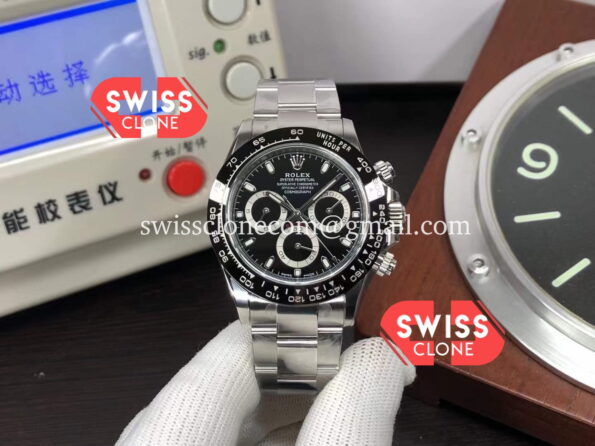
Decoding the Engineering Behind the Rolex Replicate Phenomenon
The pursuit of horological perfection often leads enthusiasts toward the complex landscape of high-fidelity mimicry. When we analyze the Rolex Replicate phenomenon, we aren’t looking at mere trinkets; we are examining a sophisticated branch of micro-engineering. This analytical guide explores how modern manufacturing attempts to bridge the longitudinal gap between mass-produced imitations and the legendary precision of Swiss-made movements. Achieving a nuanced level of detail requires more than just a visual resemblance—it demands an understanding of weight distribution, the tactile feedback of a rotating bezel, and the specific luster of 904L stainless steel.
Precision in these high-tier replicas is no longer just about the exterior. The internal architecture, specifically the oscillation frequency and the stability of the escapement, determines whether a piece is a disposable toy or a serious collector’s alternative. At Swiss Clone, we observe that the most successful replicas focus on the “feel” of the crown winding and the click-rate of the bezel. It is the microscopic execution of every component, from the screw heads to the depth of the engravings, that separates a premium clone from a common counterfeit.

Technical Specifications and Material Composition in High-Tier Replicas
The foundation of a premium replica rests on its metallurgical integrity. High-tier manufacturers focus heavily on the use of 904L stainless steel—the same alloy utilized by the original Swiss houses. This material is notoriously difficult to machine due to its high chromium and molybdenum content, yet it provides that unmistakable, bright luster and superior corrosion resistance. If you touch a low-grade replica, the weight feels “off” because the density of the steel is inconsistent. A true high-tier piece mimics the exact gram-weight of the original, ensuring the wrist presence is identical.
Beyond the casing, the glasswork is a critical differentiator. We are seeing a massive shift toward utilizing scratch-resistant sapphire crystals with multi-layer anti-reflective (AR) coatings. When light hits the crystal at a 45-degree angle, a high-quality replica should show minimal blue or purple tinting, mimicking the subtle clarity of the authentic counterpart. The gaskets and O-rings also play a silent but vital role in maintaining water resistance levels, often rated up to 50 or 100 meters in premium clones.

The Role of Dial Printing and Lume Application
The dial is the face of the watch’s soul. In high-end replicas, the printing must be razor-sharp, with no bleeding around the minute markers. We look for “sandwich” dials where the indices are actually recessed and filled with Super-LumiNova—a specific phosphorescent material. If the lume looks like a thick, painted-on blob, it is a sign of a low-tier production line. The luminosity must be consistent across all markers, providing a uniform glow in low-light environments.
Furthermore, the hand-set alignment is crucial. The second hand must sweep smoothly, indicating a high-beat movement (typically 28,800 vph), rather than the stuttering motion found in cheap quartz-based imitations. The way the hands catch the light—their polished versus brushed finishes—is a detail that only a trained eye or a dedicated enthusiast would notice during a close inspection.
Market Dynamics and the Socio-Economic Drivers of Replica Demand
The demand for high-fidelity Rolex Replicate pieces is driven by more than just aesthetics; it is a response to the extreme scarcity and skyrocketing secondary market prices of authentic luxury watches. As certain models become “investment pieces” that are nearly impossible to acquire at retail, a secondary market for high-tier clones has emerged. This isn’t just about wanting to look wealthy; it is about the desire to experience the ergonomics and prestige of a specific design without the $30,000 entry barrier.
Economic shifts have also played a role. In a globalized economy, the accessibility of high-quality manufacturing in specialized industrial zones has leveled the playing field. Collectors who may only be able to afford one “real” piece in their lifetime often turn to high-tier replicas to rotate their collection. This creates a unique ecosystem where the “replica” is treated as a functional, wearable piece of art rather than a deceptive tool.

The Impact of Digital Transparency on Quality Control
The rise of social media and specialized forums has fundamentally changed how these products are sold and vetted. In the past, a buyer might take a massive risk on an unknown seller. Today, digital transparency—through unboxing videos, macro-photography reviews, and community feedback—acts as a decentralized quality control mechanism. If a manufacturer releases a batch with poor clasp tension or incorrect font weights, the community identifies it within hours.
This transparency forces manufacturers to iterate constantly. They are no longer just competing with other counterfeiters; they are competing with the high standards set by the enthusiast community. This “arms race” of quality has led to the current era of “super clones,” where the margin of error for manufacturers has shrunk to almost zero. They must meet the expectations of a global audience that knows exactly what a Submariner or a Daytona should look and feel like.
Evaluating Authenticity: A Checklist for the Discerning Eye
For those navigating this complex market, distinguishing between a “budget” fake and a “high-tier” replica requires a systematic approach. You cannot rely on a single feature. Instead, you must perform a multi-point inspection of the watch’s physical properties. I always recommend checking the following elements in order of difficulty.
- Weight and Density: Compare the weight against known specifications; a significant discrepancy usually indicates inferior alloys.
- Bezel Action: The rotation should be smooth, with a distinct, tactile “click” that does not feel gritty or loose.
- Micro-Engravings: Inspect the inner rehaut (the ring between the dial and crystal) for crisp, legible lettering that isn’t shallow or blurry.
- Clasp Functionality: The deployment mechanism should be snappy and secure, with no visible gaps in the metalwork.

Comparative Analysis: Standard Counterfeit vs. High-Tier Replica
To truly understand the value proposition, one must look at the technical divergence between standard counterfeits and high-tier replicas. The difference is not merely cosmetic; it is structural. Standard counterfeits are often produced using mass-market components that lack durability, whereas high-tier replicas utilize specialized parts designed for longevity.
| Feature | Standard Counterfeit | High-Tier Replica |
|---|---|---|
| Material | 316L or Alloy | 904L Stainless Steel |
| Movement | Low-grade Quartz/Miyota | High-beat Automatic (Clone) |
| Glass | Mineral Glass | Sapphire with AR Coating |
| Water Resistance | Splash resistant only | Tested (50m – 100m) |
When you examine the movement, the high-tier replica often features a decorated rotor and visible jewels, mimicking the aesthetic of a luxury caliber. The standard counterfeit, by contrast, often uses a generic movement that lacks the stability required for long-term timekeeping. This is why the investment in a higher-quality piece—while more expensive—is significantly more justifiable for anyone looking for a “daily wearer.”
Frequently Asked Questions Regarding High-End Replicas
Q: How can I tell if the movement is a reliable automatic?
A: Observe the second hand. If it moves in a continuous, smooth sweep rather than a “ticking” motion, it is likely a high-frequency automatic movement. Additionally, check for the presence of a rotor that oscillates when the watch is moved.
Q: Are high-tier replicas waterproof?
A: While many are rated for 50m or 100m, they are not “diving instruments” in the professional sense. They can handle rain and hand-washing, but I would never recommend taking a replica on a deep-sea dive without professional pressure testing.
Q: What is the main difference in the metal used?
A: The use of 904L steel in high-tier replicas provides a much higher resistance to acids and chlorides (like sweat), which prevents the “pitting” or discoloration often seen in cheaper 316L alternatives.
Final Thoughts on the Future of Horological Mimicry
As manufacturing technology continues to evolve, the line between the “original” and the “replica” will continue to blur. We are entering an era where 3D micro-printing and advanced CNC machining allow for tolerances that were previously impossible. The future of the Rolex Replicate market lies in this pursuit of the “invisible” difference—where the only way to tell the difference is through a laboratory-grade analysis of the movement’s metallurgy.
For the enthusiast, the journey is about appreciation. Whether you are collecting authentic pieces or high-fidelity clones, the respect for the design, the engineering, and the history of the watch remains the same. If you are looking for a piece that captures the essence of luxury without the prohibitive cost, always prioritize material composition and movement stability above all else.
Explore our curated selection of high-fidelity timepieces and experience the pinnacle of micro-engineering.